Clinician with an idea or a startup
You see the problem in clinic every week and no product solves it, or you have already formed a company around it. We start with Co-Innovate and a patent landscape scan, then design, develop and manufacture the device. For a company, Co-Invest can come alongside with capital, mentoring and board support.
- Where it ends
- Co-Manufacturing, or full Co-Commercialize.
Who owns what we build together?
Ownership of the design and of any inventions is agreed in writing before the work starts, as part of the statement of work. A confidentiality agreement comes first, before any detail changes hands.
Is this you?
You treat patients and see a problem no device solves well. You have the idea, or you have already formed a company around it.
You have seen the problem
A gap in care you meet in your own practice: a step that is slow, unsafe or needs a device that does not exist.
An idea, or a company already
Sketches and notes, or a company with a clinician among the founders and a concept or early prototype.
You worry about the idea and the runway
What to protect and what to say in public, and money that runs out before the device is approved.
Where clinician ideas and startups go wrong
- 01
Presenting before filing
A talk at a conference, a poster or a paper can make the idea public. Under the Indian Patents Act, a public disclosure before filing can destroy the novelty a patent needs.
- 02
IP held by the founders
Patents or know-how held by a founder personally, and never assigned or licensed to the company, weaken the company in any funding round or sale. Check your hospital's invention policy too.
- 03
A plan that skips the approvals
A funding plan that ends at the prototype leaves no money for verification, the regulatory dossier and a manufacturing licence, which all come before the first sale.
File first, then talk in public
Under the Indian Patents Act, a public disclosure before a patent filing can destroy novelty, and without novelty there is no patent. Keep the idea private, or share it only under a confidentiality agreement, until a prior-art search and a filing are done. Patents are also territorial: a filing in India does not protect the idea in other countries on its own.
What to have ready, and what you leave with
Have ready
- The clinical problem, and how it is handled today
- Your sketches, notes, prototype or bench results
- Any talks, papers or filings made about the idea so far
- If you have a company: its IP position and its funding plan
You leave with
- A device designed and verified for its intended use
- Patent filings on the device, where the prior-art search supports them
- A design history file and an India regulatory dossier
- Units made under a manufacturing licence
- A route to patients, with evidence to show investors at each stage
Your path from here
- Step 1
Test the need and the idea
Check that the problem is real for other clinicians and that the idea can solve it.
Idea validation - Step 2
Protect it before you talk
Search the prior art and decide what to file before any public disclosure.
Co-Innovate - Step 3
Show that it works
Build and test a proof of principle on the bench.
Proof of principle - Step 4
Fund the company, if you have one
Seed funding and mentoring, where they fit, alongside the engineering.
Seed funding - Step 5
Design a device that can be approved
Turn the concept into requirements, a risk file and a verified design.
Co-Design & Develop - Step 6
Build it under licence
Transfer the design to production and make units under a manufacturing licence.
Co-Manufacturing - Where it ends
Co-Manufacturing, or full Co-Commercialize
Questions clinicians and founders ask
Who owns the idea and the product?
Ownership of the IP and the product, and any investment terms, are agreed in writing before work starts. Check your employment terms and your hospital policy first. In a company, make sure any IP held by a founder is assigned or licensed to the company.
Should I file a patent before I talk to you?
You do not need to file first, but do not disclose the idea in public before filing. Share details under a confidentiality agreement. A prior-art search then shows whether a filing is worth making.
Do I need to leave my practice?
No. The clinician's usual role is clinical input: the need, the users, and feedback at design reviews. The engineering sits with the development team.
Do you invest in startups?
Co-Invest covers seed funding, business mentoring and board or adviser placement. Whether it fits your company is decided case by case.
Can I test the device on my own patients?
Only with the right permissions. In India, a clinical investigation of a medical device needs permission under the Medical Devices Rules, 2017, and ethics committee approval. Device classification in India explains how risk class shapes the route.
How do I know what class my device is?
Try the class and route tool. The Medical Devices Rules, 2017 sort devices into classes A to D by risk, and the class sets the licence route.
Clinicians and engineers in one team
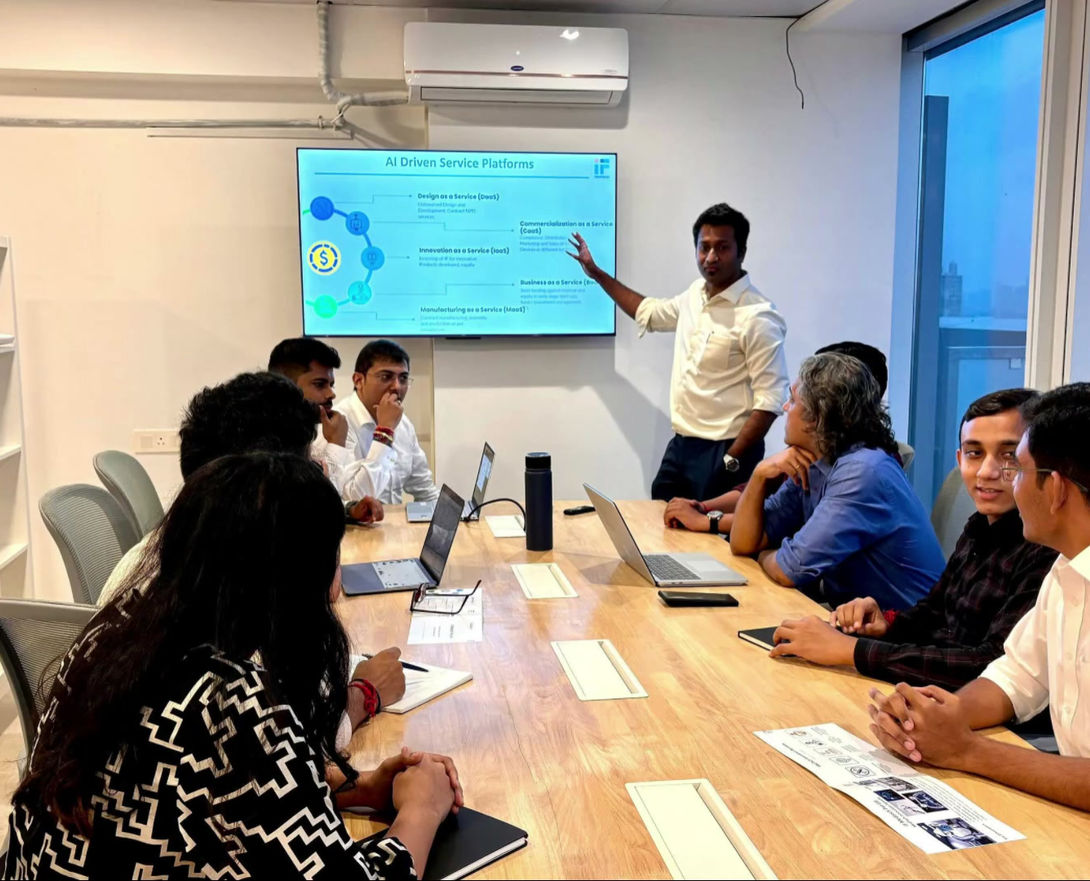
We work with 100+ clinician partners. Nine disciplines sit in one team at our design office in Navi Mumbai, so a clinical point raised at a review reaches the engineers directly.
Devices we have worked on
We name the type of device, not the client. Client work stays confidential. See every device type.
- Suturing device for wound closure
- Manual wound debridement instrument set
- Bipolar coagulation instrument for neurosurgery
- Biopsy device
- Membrane oxygenator for cardiopulmonary bypass
Run under an ISO 13485:2016 quality system certified by TÜV SÜD, certificate 99 400 00046. What it covers.
Not quite you?
Three free tools that run in your browser and send us nothing: a readiness check, an intended use builder and your likely class and licence.