Research group with IP
A lab with publications, a prototype and patents, and no route to a product. Co-Innovate takes the science to a device, with prior-art work, drafting support and licensing wrapped around it from the start.
- Where it ends
- IP ready to license, or a product handed over.
Is this you?
You lead a research group with a result or a patent, and you want to see it become a device that patients use.
A result from the lab
A method, material or sensor that works in your set-up, and perhaps a patent filing.
You want it used
A licence to a company, a startup, or a hand-off to a team that can build the product.

You worry about publishing
Papers and theses that must go out, and patents that a disclosure could damage.
Where research IP goes wrong
- 01
Publishing before filing
A paper, thesis or conference talk can disclose the invention. Under the Indian Patents Act, a public disclosure before filing can destroy novelty.
- 02
Claims built around the lab
Patent claims written around one lab set-up may not cover the product a company would make, which makes the patent hard to license.
- 03
No search before investing
Time spent on an idea that is already patented, or that reads on another patent, is time a prior-art search would have saved.
What to have ready, and what you leave with
Have ready
- The result, and the data behind it
- Any patent filings, papers or theses, with dates
- Your institution's policy on inventions and licensing
- The clinical use you have in mind
You leave with
- A prior-art and patent landscape for the invention
- Patent filings shaped around a product
- A proof of principle and prototype as a device
- An asset ready to license, or to hand to a product team
A licensee buys evidence, not only a patent
A company that licenses research IP takes on the cost of making a device. A patent alone leaves that risk with them. A proof of principle as a device, a prior-art and patent position, and an early view of the risks make the asset easier to assess. Check your institution's policy on inventions and licensing before any agreement.
Your path from here
- Step 1
Map the prior art
See what is already patented or published before you invest more.
Co-Innovate - Step 2
Show it works as a device
A proof of principle outside the lab set-up.
Proof of principle - Step 3
Record every invention
Capture what the work adds beyond the first result.
Co-Innovate - Step 4
File claims a product can use
Support for drafting filings around the device a company would make.
Co-Design & Develop - Step 5
Build a prototype
A prototype that a licensee or product team can test.
Prototype / MVP - Step 6
License it or hand it on
Offer the asset to companies, or hand it to a product team.
Contact us - Where it ends
IP ready to license, or a product handed over
Questions researchers ask
Who owns the IP?
Ownership and any licensing terms are agreed in writing before work starts. Your institution's policy on inventions may apply, so check it first.
Can we still publish?
Yes, after filing. A public disclosure before filing can destroy novelty under the Indian Patents Act, so time the paper or thesis after the filing.
Does an Indian filing protect us abroad?
No. Patents are territorial. Protection in other countries needs filings there, and each has its own deadlines.
Do we need to start a company?
Not necessarily. The asset can be licensed or handed to a product team. Talk to us about the route that fits.
From lab result to device
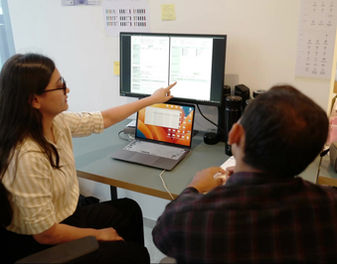
We have designed and developed 40+ devices, with nine disciplines in one team and labs in Navi Mumbai.
Run under an ISO 13485:2016 quality system certified by TÜV SÜD, certificate 99 400 00046. What it covers.
Not quite you?
Three free tools that run in your browser and send us nothing: a readiness check, an intended use builder and your likely class and licence.