Corporate spin-out
A device programme leaving a larger organisation, with technology but no standalone team around it. Co-Invest and Co-Design & Develop build the company and the product together, and transfer the entity to you at maturity.
- Where it ends
- Build to Transfer, once the company is mature.
Is this you?
You are taking a device technology out of a larger company into a new one, and you need a team and funding to build it.
Technology from a parent company
A device or platform developed inside a corporate, now placed in a separate company.
You need a team and capital
Engineering, regulatory and business support, and funding the parent will not provide alone.
You worry about what transfers
Which IP, licences, certificates and records move to the new company, and which stay behind.
Where spin-outs go wrong
- 01
Assuming the parent's licences
Licences and certificates are issued to a named company and site. The parent's manufacturing licence or ISO 13485 certificate does not cover the spin-out.
- 02
IP never formally moved
Patents and know-how that stay with the parent, with no written assignment or licence, leave the spin-out with nothing to raise money on.
- 03
Leaning on the parent's systems
Records, procedures and suppliers that live in the parent's quality system are lost when access ends. The spin-out needs its own.
What to have ready, and what you leave with
Have ready
- The agreement with the parent on IP and records
- The design file and test results so far
- The spin-out's funding and ownership position
- The markets and licences you plan for
You leave with
- A funded company with advisers in place
- A verified device and its design history file
- A regulatory dossier in the spin-out's name
- Production capability transferred to the new company
Licences follow the company, not the technology
Under the Medical Devices Rules, 2017, a manufacturing licence is issued for a named manufacturer and site, and an ISO 13485 certificate covers a named organisation. When a technology leaves its parent, these do not follow it. A Build to Transfer model builds the capability with a partner and hands it to the new company when it is ready to run it.
Your path from here
- Step 1
Fund and set up the company
Seed funding and business mentoring for the new entity.
Co-Invest - Step 2
Put advisers on the board
Board and adviser placement for the skills the team lacks.
Board / advisor placement - Step 3
Design and verify the device
Engineering, risk file and verification in the spin-out's name.
Co-Design & Develop - Step 4
Prepare the regulatory dossier
The file for a licence held by the spin-out.
India regulatory dossier - Step 5
Build the first batches
Pilot units made to production records.
Pilot & small-batch - Step 6
Take over the operation
Build to Transfer hands the capability to the company at maturity.
Build to Transfer - Where it ends
Build to Transfer, once the company is mature
Questions spin-out teams ask
Who owns the IP and the product?
Ownership, investment and transfer terms are agreed in writing before work starts. Settle the spin-out's rights from the parent first.
Can the spin-out use the parent's licence?
No. A manufacturing licence under the Medical Devices Rules, 2017 names the manufacturer and the site, so the spin-out needs its own when it becomes the manufacturer.
Does the spin-out need its own ISO 13485 system?
If it will be the manufacturer, yes. The certificate covers a named organisation. Our quality system shows what one looks like.
What is Build to Transfer?
A model in which the operation is built with a partner and handed to the company at an agreed point. Build to Transfer explains it.
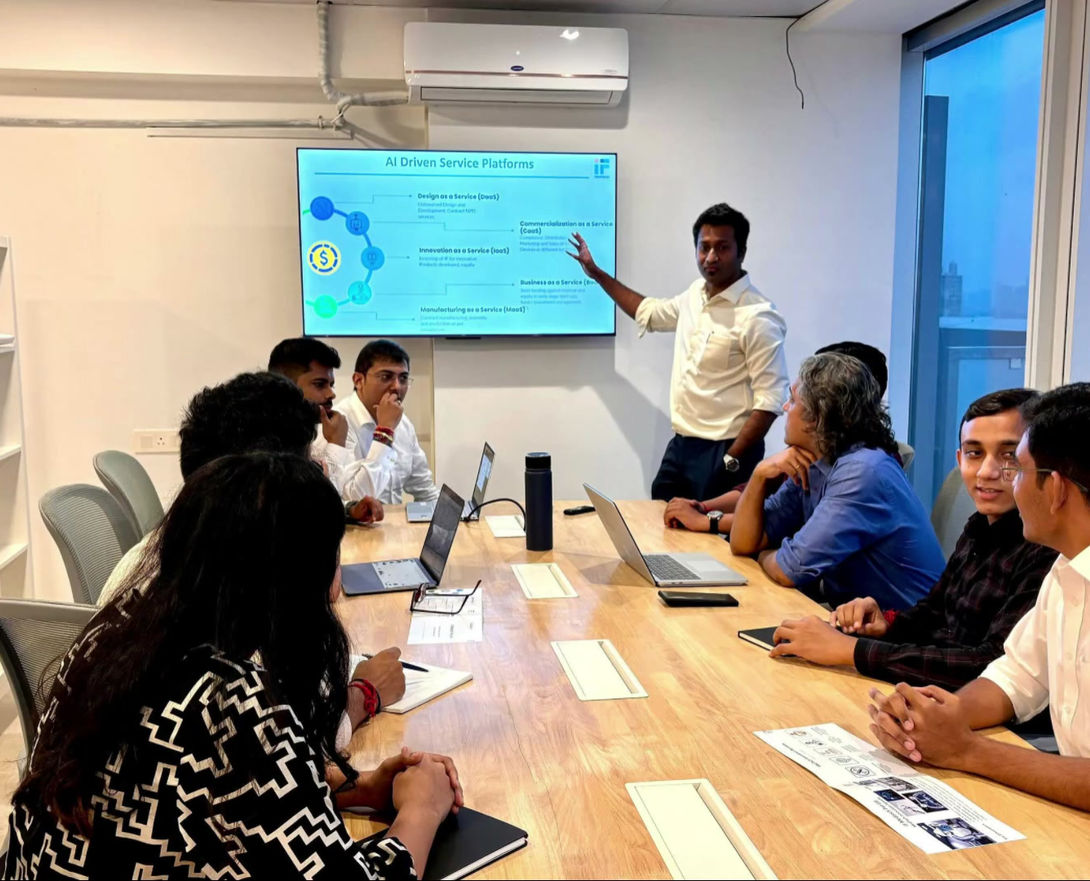
A full team from day one
Our team of 76 people includes 41 engineers across nine disciplines, with design office, labs and audited assembly lines in Navi Mumbai.
Devices we have worked on
We name the type of device, not the client. Client work stays confidential. See every device type.
- Blood and fluid warmer, in two flow ranges
- Whole-body patient warming pad system
- Organ transport system
Run under an ISO 13485:2016 quality system certified by TÜV SÜD, certificate 99 400 00046. What it covers.
Not quite you?
Three free tools that run in your browser and send us nothing: a readiness check, an intended use builder and your likely class and licence.