
Foreign company or startup
Your device sells elsewhere or is still in development, and you want it made and sold in India. Co-Design & Develop finishes or adapts the design where needed, Co-Manufacturing handles local production, and Co-Commercialize handles the CDSCO route, the distributors and the launch.
- Where it ends
- Ongoing contract manufacturing (OEM) at scale.
Who does the India work: production and approval?
Co-Manufacturing handles local production. Co-Commercialize handles the CDSCO route, the distributors and the launch. Ownership of the design and of any inventions is agreed in writing before the work starts.
Is this you?
You are a company or startup outside India. Your device is approved elsewhere or still in development, and you want it made or sold in India.

Approved, or still in development
A device with a CE mark or an FDA clearance, or a prototype and a design still in progress.
India is the next step
Plans to sell in India, to make the device here at lower cost, or both.
You worry about the rules and the IP
The Indian licences, whether your approvals count, and other companies' patents in India.
Where India entries go wrong
- 01
Assuming CE or FDA is enough
A CE mark or an FDA clearance does not let you sell in India. Under the Medical Devices Rules, 2017, a device needs an Indian licence for its class.
- 02
Moving production mid-validation
A change of site or process can void test results. Plan which verification and process validation must be repeated before you move.
- 03
No FTO in India
Patents are territorial. A device clear to make at home may read on someone else's patent in India. Check freedom to operate while the design can still change.
Import it, or make it in India
An approval in another market does not carry over. Under the Medical Devices Rules, 2017, an imported device needs an import licence, and a device made in India needs a manufacturing licence for a named manufacturer and site. Many companies start with one route and move to the other, and each move needs its own licence. Existing test reports and technical files may still support the Indian application.
What to have ready, and what you leave with
Have ready
- Your approvals and certificates, or the markets you plan to enter
- The design file, technical file and test results so far
- Your patent filings and any FTO work done
- Target cost, volumes and sales plan for India
You leave with
- A finished, verified design, if it was still in development
- An Indian regulatory dossier for the device
- A production process transferred to India
- Batches made with batch records and traceability
- Distribution partners for the Indian market
Your path from here
- Step 1
Find your class and route
Class A to D sets the licence route and the dossier.
India regulatory dossier - Step 2
Finish or adapt the design
Complete the design, or cost it down under change control, with a freedom-to-operate check alongside.
Co-Design & Develop - Step 3
Plan India-made production
Transfer the design and set up the process at an Indian site.
Design transfer - Step 4
Prove the process
Pilot batches built to production records.
Pilot & small-batch - Step 5
Scale production
Larger-scale assembly as the market grows.
Larger-scale assembly - Step 6
Reach Indian buyers
Distribution partnerships for hospitals and clinics.
Distribution partnerships - Where it ends
Ongoing contract manufacturing (OEM) at scale
Questions companies and founders abroad ask
Does our CE mark or FDA clearance count in India?
Not as a licence. The device needs an Indian import or manufacturing licence. Your test reports and technical file may still be reusable, depending on what the application asks for. India, US and EU routes compares the three.
What class will our device be in India?
Try the class and route tool. India uses classes A to D, which do not always match the class elsewhere.
Who owns the product and the IP?
Confidentiality and ownership of the product, the design and the IP are agreed in writing before work starts.
Do our certificates move with the production?
Certificates and clearances describe who makes the device and where. Talk to your notified body or regulator before you move production, and plan any re-validation.
Can you help us find distributors?
Distribution partnerships covers that work.
Made in India, to ISO 13485
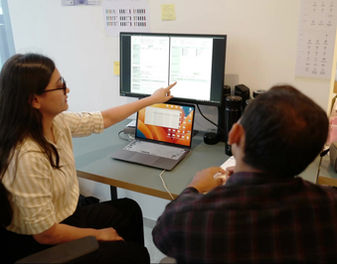
Our design office, labs and audited assembly lines are in Navi Mumbai, across 2 ISO 13485 certified sites.
Devices we have worked on
We name the type of device, not the client. Client work stays confidential. See every device type.
Run under an ISO 13485:2016 quality system certified by TÜV SÜD, certificate 99 400 00046. What it covers.
Not quite you?
Three free tools that run in your browser and send us nothing: a readiness check, an intended use builder and your likely class and licence.