

Prototype / MVP
The first build you can put in someone's hands. It works, it looks like the device, and it is still early enough to change cheaply.
When a prototype or MVP is the right step
After the core mechanism is proven. The parts come together into a first working device that people can see, hold and try.

Show it to investors
A working unit makes a funding conversation about the device, not about slides.

Put it in front of users
Clinicians and users handle it and say what works, so the design changes before it is fixed.
Integrate the parts
Electronics, firmware and housing meet for the first time, and the problems between them show up early.
What you bring, and what you get back
You bring
- The proof of principle results, or your own bench data
- The clinical need and the main users
- Target size, weight and key performance values
- Who the prototype is for: investors, a board or clinicians
- Any existing sketches, CAD or circuit work
You get back
- A first working prototype
- Breadboard or first-pass electronics, with schematics
- First firmware to run the device
- Mock-up housings, printed or machined
- A list of what worked, what did not, and what to change
- Inputs for the design and development stage
Looks-like, works-like, then both
Many first builds are two separate things: a model that looks right and a rig that works. An MVP puts both in one unit. It is still not the design you will verify. Design verification happens later, under design controls, on the released design.
How a prototype build works
Questions founders ask
Can I use the prototype on patients?
Not without the right permissions. In India, a clinical investigation of a device needs permission under the Medical Devices Rules, 2017. A prototype usually goes to users for handling and feedback, not to patients.
Is the prototype the final design?
No. It shows the device can work as a whole. The design is then developed, verified and documented. Design and development takes it from here.
Does the prototype firmware count as medical device software?
Code written to learn is often rewritten. Software that ships in a medical device is developed under IEC 62304, so if you keep prototype code, bring it under that process.
How many prototypes should I build?
Enough for the people who must see it, plus spares for damage. For 10 or more units to a released design, look at a pilot batch.
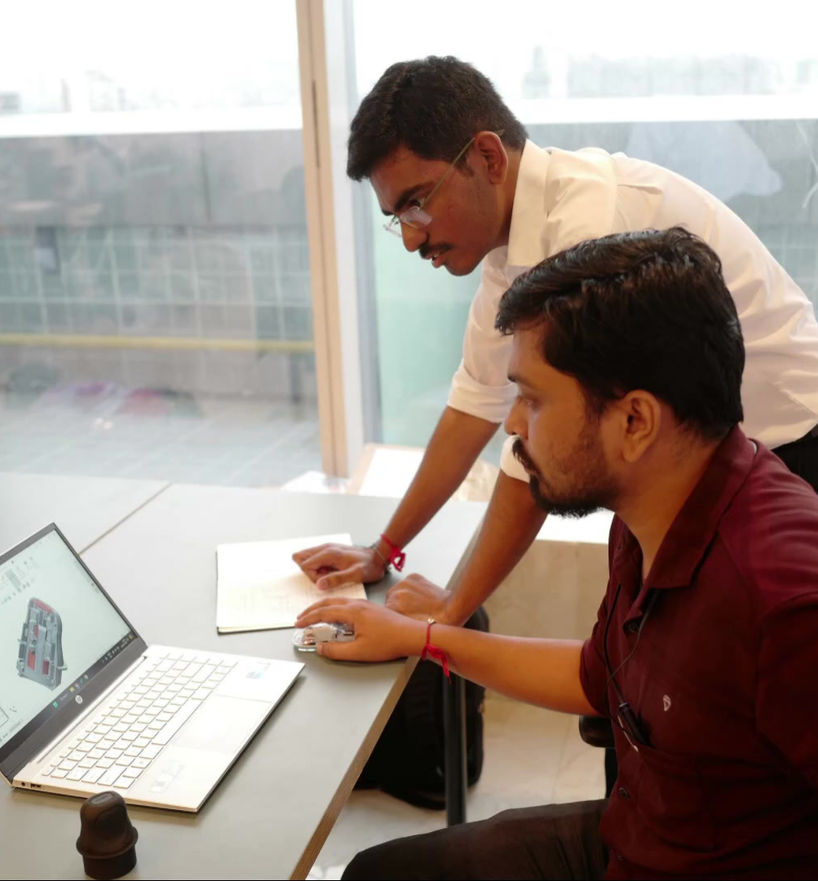
One team from breadboard to housing
Mechanical, electronics and embedded engineers work in one team, part of 41 engineers in Navi Mumbai who have designed and developed 40+ devices.
Devices we have worked on
We name the type of device, not the client. Client work stays confidential. See every device type.
- Pulsed lavage irrigation system for orthopaedic surgery
- Battery-powered bone drill with its docking station
- Suturing device for wound closure
- Manual wound debridement instrument set
- Bipolar coagulation instrument for neurosurgery
- Blood and fluid warmer, in two flow ranges
Run under an ISO 13485:2016 quality system certified by TÜV SÜD, certificate 99 400 00046. What it covers.
Not quite you?
Where this sits
Also in Co-Innovate
Tools for this
Have a question about Prototype / MVP?
Opens the contact form with this service named. Nothing is sent until you press send.